
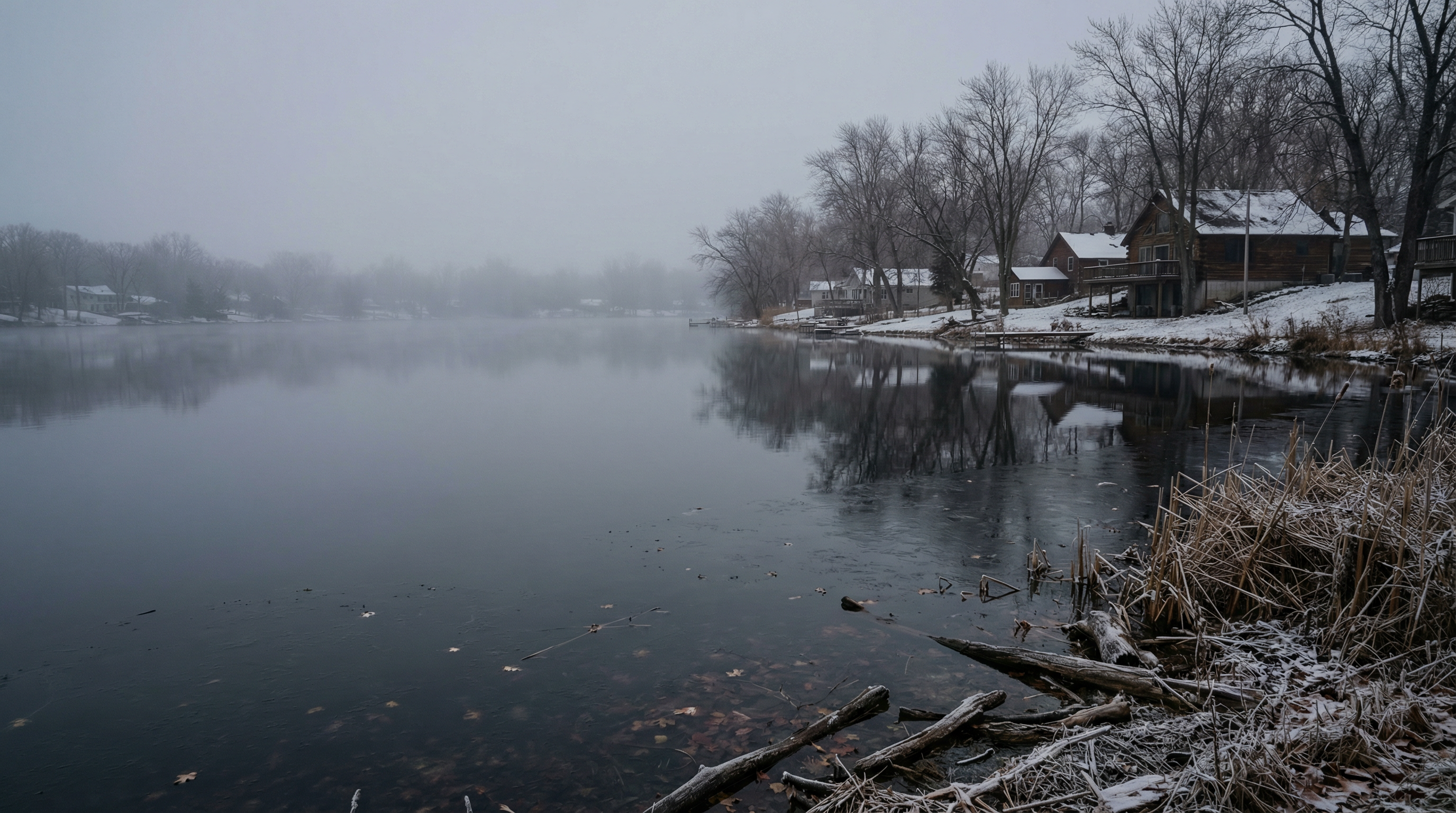
The Hidden Risks Lurking in Your Lake This Winter
Winter lake management, which Arizona property managers rely on, is often misunderstood. Most assume lake management pressure eases once October arrives. It’s an understandable conclusion—and one of the most expensive misreadings of winter risk I encounter in this industry.
Arizona lakes don’t go dormant in winter. Instead, they shift from visible crises to invisible accumulation. Because these risks don’t announce themselves as algae blooms or pump failures in December, they’re typically discovered in late March, when correcting them costs two to three times more, and vendor availability has evaporated.
Here’s what’s actually happening in your lake right now—and why waiting until spring to find out is the expensive choice.
The Biological Risks You Can’t See From the Shore
Property managers frequently assess winter water quality visually and conclude the system is stable. Clear water in December, however, is not the same as healthy water.
Golden Algae: The Silent Fish Killer
Golden algae (Prymnesium parvum) is one of the most misunderstood threats in Phoenix-area lake systems. Unlike green algae, it doesn’t discolor water or announce its presence. It thrives in cooler temperatures, brackish conditions, and reclaimed water systems – all common in Arizona.
When conditions align, it produces toxins that cause rapid, large-scale fish kills with virtually no warning. I’ve documented communities losing 60-80% of their fish populations in 48 hours.
This is diagnosable in advance. Water chemistry panels identify conditions that favor golden algae before toxin production begins – but only if testing occurs in winter, when intervention is still possible.
Dissolved Oxygen Depletion
As water temperatures drop, dissolved oxygen levels can fall into ranges that stress or kill fish—even when the water appears clear. This is one of the most overlooked risks in winter lake management that Arizona property managers face each year.
However, most vendors misread winter as a period of low biological demand and therefore deprioritize dissolved oxygen monitoring. Yet, in Arizona lakes carrying heavy organic loads, undersized aeration, and reclaimed water nutrients, that assumption creates vulnerability. As a result, winter dissolved oxygen can drop below safe thresholds without any visible symptoms.
Instead, we don’t chase symptoms—we diagnose systems. For example, a winter dissolved oxygen profile reveals whether aeration infrastructure is keeping pace with the lake’s biological reality. Otherwise, waiting until spring means the window to correct the issue affordably has already closed.
Nutrient Dormancy: The Spring Bloom Time Bomb
Summer heat, monsoon runoff, and reclaimed water leave behind elevated nitrogen and phosphorus loads. In winter, those nutrients settle into sediment and appear inactive. They’re not. They’re accumulating.
When water temperatures climb in March and April, those stored nutrients fuel aggressive algae blooms that cost $8,000-$15,000 to treat reactively.
Here’s what most vendors miss: nutrient loads can be addressed in winter – before the bloom cycle begins – for a fraction of what reactive spring treatment demands. Nutrient binding and sediment management work best when water temperatures are cool and biological pressure is low.
The hidden cost does not appear in winter. It compounds through the spring emergency response.
The Mechanical Risks Left Behind by Summer
Arizona summers are brutal on lake infrastructure. Water temperatures reach 85-95°F for months. Pumps, compressors, and electrical components operate at sustained high demand. Monsoon season introduces sediment and moisture into already-stressed systems.
By October, most lake systems have logged 2,500+ operational hours under extreme conditions. Winter is when that wear becomes diagnosable – and when it should be addressed.
Pump Performance Degradation
Pumps that operated through summer often, over time, show reduced flow rates, elevated amp draws, and early bearing wear that hasn’t triggered failure—at least not yet.
Without proper performance assessment, these pumps continue running inefficiently and expensively, gradually moving toward a failure point that typically occurs in late spring. At that point, demand is highest, repair costs are elevated, and vendor lead times can extend to three weeks.
For example, I received a call in June from a property manager reporting a sudden pump failure. In reality, the pump had not failed suddenly—it had been degrading since November. In other words, the failure was predictable; it simply went undiagnosed.
Ultimately, maintenance should be the floor—not the ceiling. By conducting winter pump diagnostics, degradation can be caught early, allowing repairs to be planned and emergency premiums to be avoided.
Aeration System Decline
Diffusers foul. Compressor output drops. Airlines develop micro-leaks. These aren’t sudden failures – they’re gradual performance losses that don’t trigger alarms.
An aeration system that tested adequately in April may operate at 60-70% capacity by January. In reclaimed water lakes with high nutrient loads, that 30-40% performance gap is the difference between a stable system and one creating conditions for oxygen deficits and algae blooms.
Running is not the same as performing. We measure output, evaluate diffuser efficiency, and calculate whether systems are sized for actual biological load – not what they were designed for five years ago, before nutrient inputs increased.
Wet Well Sediment: The $40,000 Oversight
Wet well sediment rarely causes an immediate crisis. In winter, lake management in Arizona systems depends on, however, it quietly restricts flow, increases pump strain, and gradually accelerates wear on intake components.
Over time, if left unaddressed for multiple years, it can amount to $40,000 or more in compounded labor costs, equipment replacement, and efficiency losses. As a result, a problem that once required routine maintenance becomes a significant capital expense.
Fortunately, winter is the most practical time to address it—before biological activity resumes and before an unbudgeted pump replacement appears at a March board meeting.
After all, no one wants to defend that line item when it could have been prevented six months earlier.
Electrical Panel Integrity
Monsoon season introduces moisture and debris into control panels. Corrosion develops. Connections loosen. These issues create safety hazards, code compliance gaps, and unpredictable system behavior.
Year-end electrical inspection isn’t optional. It’s risk management.
Why Visual Inspections Miss All of This
Every problem described here shares one characteristic: none are visible from the shoreline. In winter lake management, Arizona professionals rely on the fact that these hidden issues are often the most expensive if left undiagnosed.
A lake can appear calm and clear while simultaneously carrying dissolved oxygen deficits, dormant nutrient loads, pumps operating at 70% efficiency, and electrical panels one moisture event away from failure.
This is where most lake management contracts fall short. They’re structured around visual observation and reactive chemical application. If it looks acceptable, nothing occurs.
Effective Arizona lake system diagnostics require water chemistry testing, equipment performance measurement, sediment evaluation, and electrical inspection – conducted as an integrated assessment. Biological problems frequently have mechanical root causes. Mechanical failures accelerate biological ones.
What Happens When Winter Problems Go Unaddressed
I’ve observed this pattern repeat annually. Communities that defer Q1 diagnostics consistently face higher emergency expenditure in Q2 and Q3. It’s not a circumstance. It’s cause and effect.
March/April: Nutrient loads fuel aggressive spring blooms. Emergency treatment cost: $8,000-$15,000 per event.
May/June: Degraded aeration fails to support oxygen demand. Fish stress occurs. Emergency equipment rental follows. Another unbudgeted line item.
June/July: Pumps have been degrading since January fail during peak irrigation demand. Lead time: 2-3 weeks. Cost: $12,000-$20,000, plus lost irrigation capacity.
For property managers and boards, this extends beyond budget overruns. It involves resident complaints, unplanned board meetings, and vendors unable to explain recurring problems.
I’ve had property managers state, “I wish someone had told me this in January.”
That’s what this article is.
A Proactive Approach Starts Now
Lake Maintenance Service operates under a 360° Water Management System: One Team. One Accountability. One Plan. Through this approach, we assess biological water quality and mechanical infrastructure together—because only then can we understand what is actually occurring.
Accordingly, we don’t chase symptoms; we diagnose systems. Just as importantly, we communicate in language that helps property managers and boards make informed decisions—rather than reactive ones.
However, if your lake system has not undergone comprehensive diagnostics this season, the window to address degradation proactively is closing. Too often, the issues that surface in May as emergency line items were already diagnosable in January, when resolution was affordable, planned, and did not require board approval under time pressure.
For that reason, we offer complimentary full-system diagnostics to property managers and boards evaluating their current lake management standards. Specifically, our assessments integrate biological and mechanical analysis to identify priority risks and establish performance benchmarks before seasonal demand returns.
waterandlakes.com | Serving Maricopa County and Arizona
Making Water Beautiful.